 Call 1300 650 540

Stronger safeguarding starts at the top: Bringing safety conversations into the boardroom
In any organisation, what gets prioritised at the top determines what gets attention throughout the rest of the workforce. But when boards are faced with competing issues – from budgets to regulation and operational challenges – some priorities can struggle to get the attention they need.
Yet for care providers responsible for children and other vulnerable people, there’s one area that boards can’t afford to ignore: safeguarding.
Ansvar recently spoke with Hetty Johnston AM, GAICD, one of Australia’s leading child protection specialists and safeguarding governance consultants, about what it takes to keep safeguarding firmly on the boardroom agenda.
Drawing on decades of experience working to improve the way children are protected, Hetty shared how board-level decisions can drive what happens throughout care organisations. Her insights shed light on what effective safeguarding looks like in practice, from accountability and reporting to training and organisational culture.
Hetty previously worked as a member of the Ansvar Risk Solutions team for over 12 months. She was one of the architects of Ansvar’s safeguarding risk management and helped Ansvar consider its underwriting approach in relation to this risk. Hetty’s expertise and experience has supported Ansvar in being able to bring specialist expertise to sectors requiring insurance coverage and support with safeguarding.
Why safeguarding belongs on the board agenda
Australia’s National Principles for Child Safe Organisations place leadership, governance and culture at the heart of creating a safe environment for children. Board oversight plays a key role in making that happen. Directors need to understand potential safeguarding risks, the measures in place to manage them, and how effectively those measures are working in practice.
And the stakes are high. A safeguarding failure can cause profound and lasting harm to a child. It can also have serious consequences for the organisation, including regulatory and financial penalties, loss of trust among families, employees and the wider community and, in serious cases, its ability to continue providing services.
Yet Hetty has seen first-hand how easily safeguarding can be pushed down the list when other pressures take precedence:
“It’s not that people don’t care about safety; they do. The challenge is that boards have many competing priorities, and financial concerns often come first. Clear requirements, accountability, and consequences are what help ensure safeguarding receives the attention it needs.”
Regular scrutiny gives directors a practical way to maintain that focus. It starts with asking the right questions:
- What concerns have been raised?
- How were they handled?
- Are people equipped to recognise warning signs?
- Do they know how to escalate a concern?
- Are safeguarding processes working as intended?
Asked consistently, those questions influence far more than the discussion taking place around the boardroom table.
From board oversight to a culture of safeguarding
Policies and procedures provide an important foundation for safeguarding. What matters day to day, though, is whether people understand what those policies mean for them and know how to put them into practice.
Boards have an important role to play here. Hetty describes what happens when safeguarding is regularly discussed and reported on at board level as a “trickle-down effect”.
“When the board is focused on safeguarding and asks for proper oversight and reporting, that expectation flows through the organisation. The CEO asks managers, managers ask their teams, and suddenly everyone is thinking about safeguarding.”
She draws a parallel with workplace health and safety. Years of education, regulation, and reinforcement have taught people to recognise many workplace hazards almost instinctively. A cord stretched across a walkway or an unsafe ladder can register immediately as something requiring attention.
Safeguarding awareness can develop in a similar way. With the right education and reinforcement, people become more alert to concerning behaviour and more confident about raising it. Managers can become better equipped to recognise patterns across incidents. Over time, safeguarding becomes something people actively think about as they work.
Building that kind of culture takes practical measures that support people at every level.
Putting it into practice: How boards can strengthen safeguarding governance
Hetty’s experience highlights three key areas where boards can strengthen this connection.
1. Build reporting and accountability into governance
Regular reporting gives safeguarding a clear place in board discussions and creates a reason for information to be passed up through the organisation. Boards need reliable and current information about concerns and incidents, the actions taken, matters requiring escalation or external reporting and any patterns or emerging risks that need a closer look.
Consistency is key. Reporting at regular intervals allows directors to follow developments over time, ask questions and identify where action may be needed.
It also helps make responsibility clear. Boards need to ask for the right information; executives and managers must understand how to gather it and what action to take; frontline staff need clear pathways for raising concerns.
The same applies when an incident occurs. People need to know who should be informed, what needs to happen next, and who is responsible for following through.
The goal is simple: when someone raises an issue, it needs to reach the right people and lead to the right action.
Jaime Ennion, Ansvar Product and Underwriting Manager – Casualty, sees a similar distinction between having safeguarding processes in place and embedding them into everyday practice: “What years of insurance experience has taught me is that ticking the compliance box does not always avoid an adverse outcome. Compliance in practice, and compliance embedded throughout an organisation, is far more effective in prevention of incidents.”
2. Give people the knowledge to act
Before a safeguarding concern can be addressed, it needs to be recognised – and that relies on training people to know what they’re looking out for.
Hetty uses the analogy of a forest. At first glance, you see the obvious details like trees and rocks. But hidden within the forest are foxes. Once you know they are there and understand what to look for, you begin to see them.
She sees the same principle at work with a situation like grooming: “If you don’t know what you’re looking for, you won’t see it.”
Training and education can help employees recognise concerning behaviour and understand what to do when they see it. But boards should look deeper than training completion rates.
- Do people understand what they have learned?
- Can they recognise risk in real situations?
- Do they know what to do when they encounter it?
The importance of helping people recognise and respond to concerns cannot be overstated.
“In terms of safeguarding, irrespective of a documented safeguarding or insurance policy, everyone involved needs to be aware of the devastating and lifelong impacts that can result when vulnerable people are not protected,” says Jaime.
3. Test how safeguarding works in practice
For boards, when considering if safeguarding measures are working, the clearest evidence comes from what happens in practice.
Hetty has worked with providers that have embraced safeguarding guidance and built it into the way they operate. On the flipside, she has also encountered providers that could produce the expected policies, with little evidence that those policies were actually affecting behaviour. She says: “You can see when an organisation has genuinely taken safeguarding advice on board. The policies need to be reflected in what people actually do.”
Jaime agrees: “Ticking the compliance box does not always avoid an adverse outcome.”
Boards can look for that evidence in areas such as:
- the concerns being reported
- the way managers respond
- employees’ understanding of escalation processes
- the follow-up after an incident
- the level of oversight in higher-risk environments
Together, these signs show whether safeguarding is working where it really counts: in the everyday decisions of the people responsible for keeping others safe. Ultimately, that’s what good safeguarding governance should help achieve.
People spot concerns earlier, feel able to speak up, and know what to do next. And the people in their care are better protected as a result.
Understanding insurance cover
Effective safeguarding also requires organisations to understand whether their insurance arrangements align with their risk profile. As Jaime explains: “No two policies are the same. Understanding your cover, and understanding the gaps in the cover, are what really matters. Saving a few thousand dollars at renewal is going to be poor comfort if your policy does not respond when it is needed.”
How Ansvar supports stronger safeguarding governance
For more than six decades, Ansvar has worked with organisations that care for and support vulnerable people. That experience has given us a deep understanding of the safeguarding risks these providers face and how those risks can play out in practice.
Working with specialists like Hetty Johnston, we help organisations strengthen the governance, procedures and protections that create safer environments. A useful question for any board to ask is: How confident are we that safeguarding is working as it should?
The answer can be found in what happens every day – whether people recognise risks, concerns are raised and acted on, and the safety of vulnerable people remains central to the decisions being made.
Organisations can also access support from Ansvar’s Enterprise Risk Management (ERM) team. “What I love about Ansvar is our purpose. We exist for the benefit of the communities we support. Our ERM team are specialists in this field, and their breadth of experience gives them insights an individual organisation may not have access to. They are a resource available to Ansvar customers to support effective safeguarding in practice,” says Jaime.
If you’re an insurance broker with clients that serve vulnerable people, get in touch with one of the Ansvar’s team to discuss how we can help.
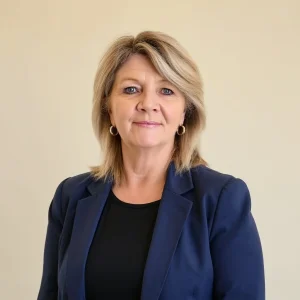
One of Australia’s most sought-after child protection experts, Hetty Johnston has dedicated her career to improving the protection of children and vulnerable people.
In 1997, she founded Bravehearts, which would become Australia’s leading charity fighting child sexual assault.
After leading the organisation for 24 years, Hetty continued her work in the field as a child protection specialist, safeguarding governance consultant, media commentator, and national and international keynote speaker – contributions that have won her numerous awards and accolades.
She currently sits as a Director with Change for Youth Foundation, is a member of the Queensland Child Death Review Board, and serves on various other committees. Hetty was appointed a Member of the Order of Australia in 2014 and named Queensland Australian of the Year in 2015.